
AI essay writing tips: how to use AI tools without getting flagged
Quick take
AI can help you write better essays faster, but raw AI output will get flagged by Turnitin and GPTZero almost every time. The key is using AI at the right stages of your writing process and making the final text genuinely yours.
Where AI helps with essay writing
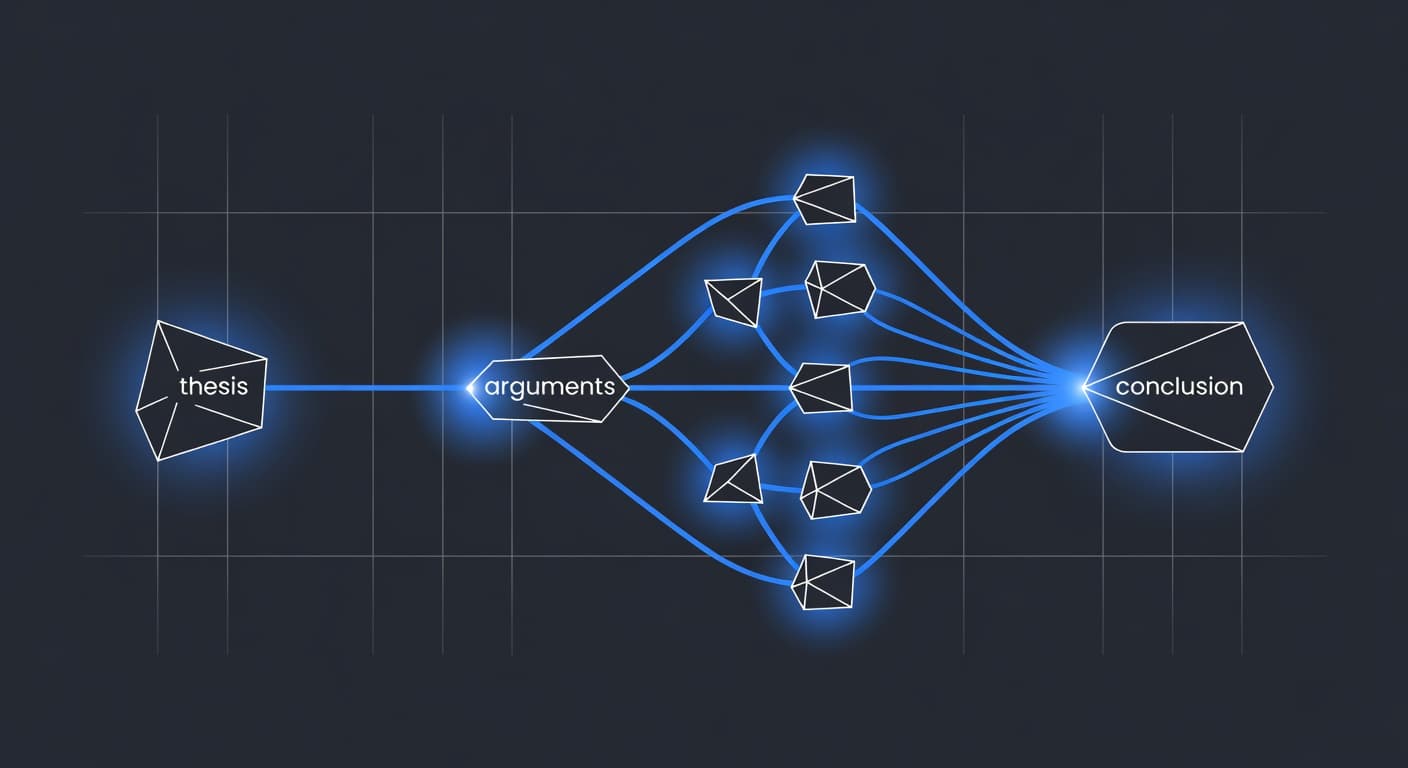
The best use of AI in essay writing isn't generating the essay. It's the work around the essay. AI excels at brainstorming thesis statements, organizing arguments, finding counterpoints, and identifying gaps in your reasoning. These tasks eat up time but don't require your personal voice.
Research with AI
Use ChatGPT or Claude to explore your topic before diving into primary sources. Ask the AI to explain key debates, summarize different perspectives, and identify the strongest arguments on each side. Then verify everything against actual sources.
Claude is particularly useful for academic research because you can upload PDFs of journal articles and ask it to summarize findings, identify methodology strengths, and suggest how the research relates to your thesis.
Building your outline
Prompt the AI with your thesis statement and ask it to generate three different outline structures. Compare them and pick the strongest argumentative flow. Then modify it based on your own reading and understanding of the material. A good outline makes the drafting stage straightforward, whether you write it yourself or use AI assistance.
Drafting with AI
If you use AI for the actual draft, generate it paragraph by paragraph. Give the AI your outline point, the evidence you want included, and the argument you're making. Review each paragraph before moving to the next. This produces better output than asking for a complete essay in one prompt.
Then rewrite substantially. Change the sentence structure. Add your own analysis of the evidence. Replace generic claims with specific observations from your reading. The goal is a final text where every paragraph reflects your understanding, even if AI helped organize the initial structure.
Avoiding AI detection
Turnitin's AI detection and GPTZero both look for statistical patterns in text: predictable sentence lengths, uniform paragraph structure, common AI phrases, and the absence of stylistic variation. Simply swapping words with a thesaurus doesn't change these patterns enough.
What works is rewriting the text to match a real person's writing style. UmanWrite's voice training learns your writing patterns from samples you provide, like previous essays or papers. When you run an AI draft through the humanizer, the output matches your actual style, which passes detection because it genuinely reads like a specific person wrote it.
Always check your essay with an AI detector before submitting. If any section scores above 20% AI probability, rewrite that section manually.
What to avoid
Don't submit unedited AI output. Don't use paraphrasing spinners that just rearrange words. Don't ask AI to write your thesis statement for you, because your thesis should reflect your actual argument. And don't use AI for take-home exams unless your professor explicitly allows it.
Essay types where AI helps most
Research papers and literature reviews benefit most from AI assistance because they involve synthesizing existing information. Argumentative essays benefit from AI outlining but need your genuine perspective in the draft. Personal essays and creative writing are the worst fit for AI because the whole point is your unique voice and experience.
FAQ
Will my professor know I used AI?
If you submit raw AI output, almost certainly yes. Turnitin flags unedited ChatGPT text with over 90% accuracy. Well-edited, humanized text is much harder to detect. The safest approach is using AI as a research and outlining tool while writing the actual prose yourself.
Is using AI for essays considered cheating?
It depends on your institution's policy and the specific assignment. Using AI for brainstorming and grammar checking is generally accepted. Submitting AI-generated text as your own work violates most academic integrity policies. Check your school's guidelines and when in doubt, ask your professor.
Which AI tool is best for academic essays?
Claude handles academic writing best because it maintains nuance and can work with uploaded research papers. ChatGPT is better for structured outlines and generating multiple thesis options. Both need heavy editing for academic submission. See our AI writing for students guide for more detail.
Sources
- Turnitin - AI writing detection
- GPTZero - How detection technology works
- Chronicle of Higher Education - AI writing and academic integrity