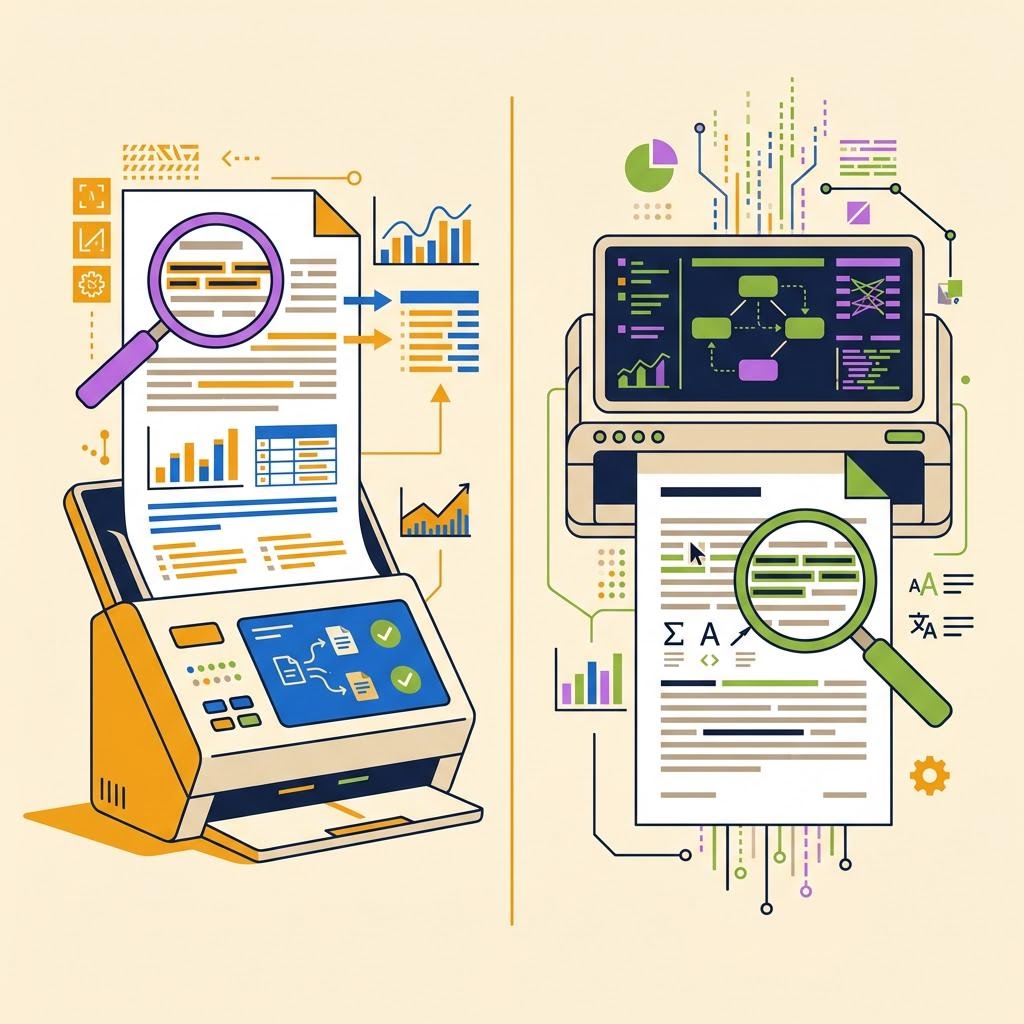
AI humanizer vs paraphraser: which one keeps your meaning?
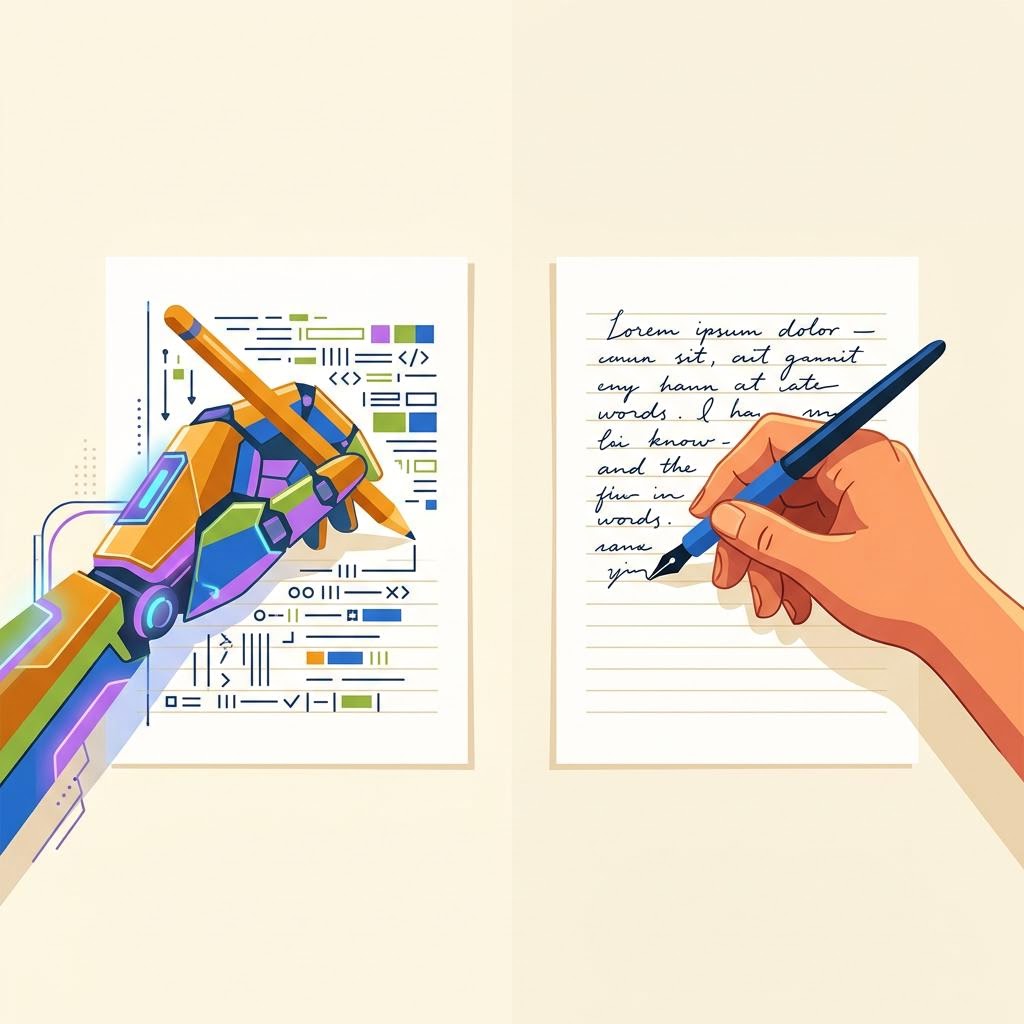
Humanizers and paraphrasers look similar but solve different problems. Here is how to choose the right one for your draft.
In 2026, AI detection has become precise enough that a simple synonym swap no longer fools modern classifiers. Humanizers and paraphrasers both claim to "improve" your AI-generated text, but they work in fundamentally different ways. A humanizer injects natural phrasing, sentence rhythm, and idiomatic voice to make AI writing sound human-authored and dodge detection tools. A paraphraser replaces words and restructures sentences for clarity or brevity, but leaves the detection fingerprint intact. Choosing the wrong tool wastes time or worse: it flags your work as suspicious. This guide breaks down how each works, when each fails, and how to decide which one your draft actually needs.
What is an AI humanizer?
An AI humanizer takes an AI-generated draft and rewrites it to read like a human wrote it, while keeping the core meaning, structure, and message intact. Unlike a paraphraser, which swaps words and reorders clauses, a humanizer injects natural language patterns, sentence variety, conversational tone, and the kind of small imperfections humans actually use. It's designed to pass AI detection tools because it attacks the statistical signature that detectors look for.
A good humanizer doesn't just randomize sentences. It studies authentic human writing in your field or voice, then applies those patterns to your AI draft. Some tools like UmanWrite's humanizer go further by learning your personal writing voice from samples you provide, so the output reads like *your* writing, not generic human writing. This is critical: a humanized text that sounds like a stranger is still suspicious.
What is a paraphraser?
A paraphraser is a word-replacement tool that takes a sentence or paragraph and rebuilds it with different vocabulary and sentence structure, while keeping the same information and intent. Tools like QuillBot or Synonym.com scan your text, identify key words, swap them for alternatives, and rearrange clauses. The goal is usually clarity, brevity, or to avoid plagiarism of source material you've quoted directly.
Paraphrasers are deterministic: they follow rule-based or learned synonym dictionaries to substitute words. If your draft says "The results showed that customer engagement improved," a paraphraser might output "Findings indicated that user involvement enhanced." It's faster than rewriting by hand, but it doesn't rethink the sentence's rhythm, voice, or how a human would actually express that idea. Importantly, it doesn't change the underlying language patterns that AI detectors flag.
How does detection avoidance differ between them?
AI detectors like GPTZero and Originality.ai don't scan for forbidden words; they measure statistical patterns in how sentences are built, how ideas flow, and how varied the vocabulary is. AI text tends to show low perplexity (predictable word sequences) and consistent sentence structure. A paraphraser changes some words but preserves these patterns, so detection risk stays high. A humanizer deliberately introduces the unpredictability and variety that human writers use, which is why it works against detectors.
Research from Originality.ai (2024) and testing in 2026 shows that synonym-swapped text actually performs worse against modern detectors than untouched AI text, because the awkward phrasing becomes its own fingerprint. A humanizer that rewrites sentences from scratch, varies sentence length, and uses contractions or casual phrasing can achieve 80-95% undetectable status on leading detectors when done well. A paraphraser typically fails these same tests because it leaves the core statistical signature in place.
When should you use a paraphraser?
Use a paraphraser when you need to rephrase text you already wrote yourself, or when you're avoiding plagiarism of a source you cited directly. If a teacher or editor flagged a sentence as awkwardly worded, a paraphraser can fix it without rewriting from scratch. Paraphrasers are also fast: most process a paragraph in seconds. For legitimate clarity work on your own writing or summaries of public sources, paraphrasers are efficient.
Paraphrasers also work well in professional settings where your goal is style, not evasion. If you're editing a LinkedIn post or internal memo for tone and conciseness, a paraphraser adds variety without raising eyebrows. The gap closes when both the original text and the paraphrased text are genuinely your own work.
When should you use a humanizer?
Use a humanizer when you've drafted text with AI help (ChatGPT, Claude, Gemini) and need to submit it without triggering an AI detection flag. Humanizers are built for this: they assume your starting text is AI-generated and your goal is to preserve its core message while making it undetectable. If you're using AI as a co-writer or starting point, a humanizer is the right next step.
A humanizer also shines when you want the output to sound like *you*, not a generic rewrite. Tools that learn your voice from writing samples can ensure the humanized draft preserves not just meaning but your personal style. This is especially valuable for academic work, professional writing, or anything where the reader knows your voice and would notice an imposter.
- Humanizers: best for AI-generated drafts, voice preservation, detection evasion, and co-writing workflows.
- Paraphrasers: best for clarity, plagiarism avoidance on quoted material, and refining human-written text.
- Humanizers inject idiom and conversational variation; paraphrasers use synonym dictionaries.
- Combining both tools often backfires because inconsistent humanization + awkward phrasing looks more suspicious, not less.
Direct comparison: humanizer vs paraphraser
| Feature | Humanizer | Paraphraser |
|---|---|---|
| Primary use case | Make AI-generated text sound human-written | Rephrase text for clarity or plagiarism avoidance |
| Preserves meaning | Yes, core meaning stays intact | Yes, typically word-for-word equivalent |
| Preserves voice | Yes, if voice-trained; no, if generic | No; removes stylistic markers |
| Passes AI detection | Often yes (80-95% on leading tools) | Often no; synonym swaps create new red flags |
| Sentence variety | High; deliberately rewrites and varies length | Low; rearranges existing structure |
| Speed | Moderate to slow (rewriting takes time) | Very fast (word-level substitution) |
| Risk if misused | Overuse can sound generic or robotic if not voice-trained | Looks obviously edited and raises detector suspicion |
| Best for academic work | Yes, when combined with authentic thinking | No; doesn't address underlying detection risk |
Why paraphrasers often fail against AI detectors
Paraphrasers rely on synonym swapping and clause reordering, which are shallow edits that leave AI fingerprints intact. A detector trained on millions of AI-generated texts learns to spot not just word choices but sentence-building patterns. When a paraphraser replaces "we conducted a comprehensive analysis" with "we performed an exhaustive examination," both phrasings carry the same statistical markers: formal vocabulary, subordinate clause structure, and predictable word sequencing. The detector still flags it.
Worse, awkward paraphrases create new red flags. When a paraphraser produces phrasing that no human would naturally write, it signals intervention. A humanizer avoids this by rewriting entire sentences in natural, conversational ways. This is why chaining a paraphraser on top of AI text often produces the worst result: you get the unnatural phrasing of a paraphraser applied to an already-formal AI draft.
How to choose: humanizer or paraphraser?
Ask yourself three questions. First: Is this text AI-generated, or did I write it? If it's AI-generated, use a humanizer. If it's yours, a paraphraser can help polish it. Second: Do I need to pass AI detection, or just improve clarity? Detection evasion demands a humanizer; clarity work can use either tool. Third: Do I want this to sound like me, or just readable? Humanizers with voice training sound personal; paraphrasers sound generic.
- Check your output source. AI draft = humanizer. Your own writing = paraphraser.
- Define your constraint. Must pass detection? Humanizer. Just fixing grammar or plagiarism? Paraphraser works.
- If voice matters (academic, professional, personal), use a humanizer with voice-learning capability, not generic rewriting.
- Test your result with an [AI detector](/ai-detector) to confirm it passes your institution's or publisher's standards.
- Never combine paraphrasing and humanizing on the same draft in sequence; choose one and execute it cleanly.
Humanizers and paraphrasers are fundamentally different tools for fundamentally different problems. As of 2026, AI detection is sophisticated enough to catch word-swapped text, making paraphrasers ineffective for evasion. If you're using AI in your workflow, a proper humanizer that understands natural language variation is the right choice. And if you want your output to sound like you, not a stranger, UmanWrite's voice-learning humanizer gives you that control. Ready to test it? See our pricing options and start with a sample draft.
Frequently asked questions
+Will a paraphraser help me pass an AI detector?
No. Paraphrasers use synonym dictionaries and clause reordering, which leave the underlying statistical patterns that detectors flag. Synonym-swapped text often performs worse than unmodified AI text because the awkward phrasing becomes its own fingerprint. If you need to pass detection, use a humanizer, not a paraphraser.
+Can I use both a humanizer and paraphraser on the same draft?
Not in sequence. Applying a paraphraser first, then humanizing, creates awkward phrasing that the humanizer has to fix, and leaves synonym-swap fingerprints that detectors can catch. If you need both clarity and detection evasion, start with a humanizer and refine from there.
+Is a paraphraser useful for anything related to AI writing?
Only if your goal is clarity or readability, not detection. A paraphraser can tighten a humanized draft or improve an AI-generated summary you don't plan to submit. But for original submission, paraphrasers add risk without benefit.
+What's the difference between a generic humanizer and one that learns your voice?
A generic humanizer applies standard human-writing patterns; the result sounds human-written but generic. A voice-trained humanizer learns from your own writing samples and applies your personal style, idiom, and rhythm, so the output sounds like you. For academic and professional work, voice training is essential.
+Do AI detectors specifically look for paraphrased text?
Not explicitly, but they detect the statistical patterns paraphrasers leave behind. Modern detectors recognize that synonym-swapped sentences have unusual word frequencies and repetitive structure. The awkwardness itself becomes a signal.
+When is a paraphraser the right tool?
Use a paraphraser when you're editing your own writing for brevity or clarity, or when you're rephrasing a source you've cited directly. Paraphrasers are not designed for AI evasion and should not be used for that purpose.
+Can I use a paraphraser before submitting human-written work?
Yes, if your goal is style improvement only. But be cautious: over-paraphrasing your own work can make it sound stilted. Use paraphrasing sparingly on genuine writing to improve readability, not to hide the fact that it's yours.
+What happens if I humanize text that's already been paraphrased?
The humanizer has to work harder to smooth out awkward phrasing from the paraphrase, and detection risk remains higher because underlying statistical patterns are still off. Start fresh with a humanizer on raw AI output for best results.